
Primary source
The Last Lecture (book_cube)
Two posts with a structured review of the book and Randy Pausch's life principles.
Primary source
The Last Lecture (book_cube)
Two posts with a structured review of the book and Randy Pausch's life principles.
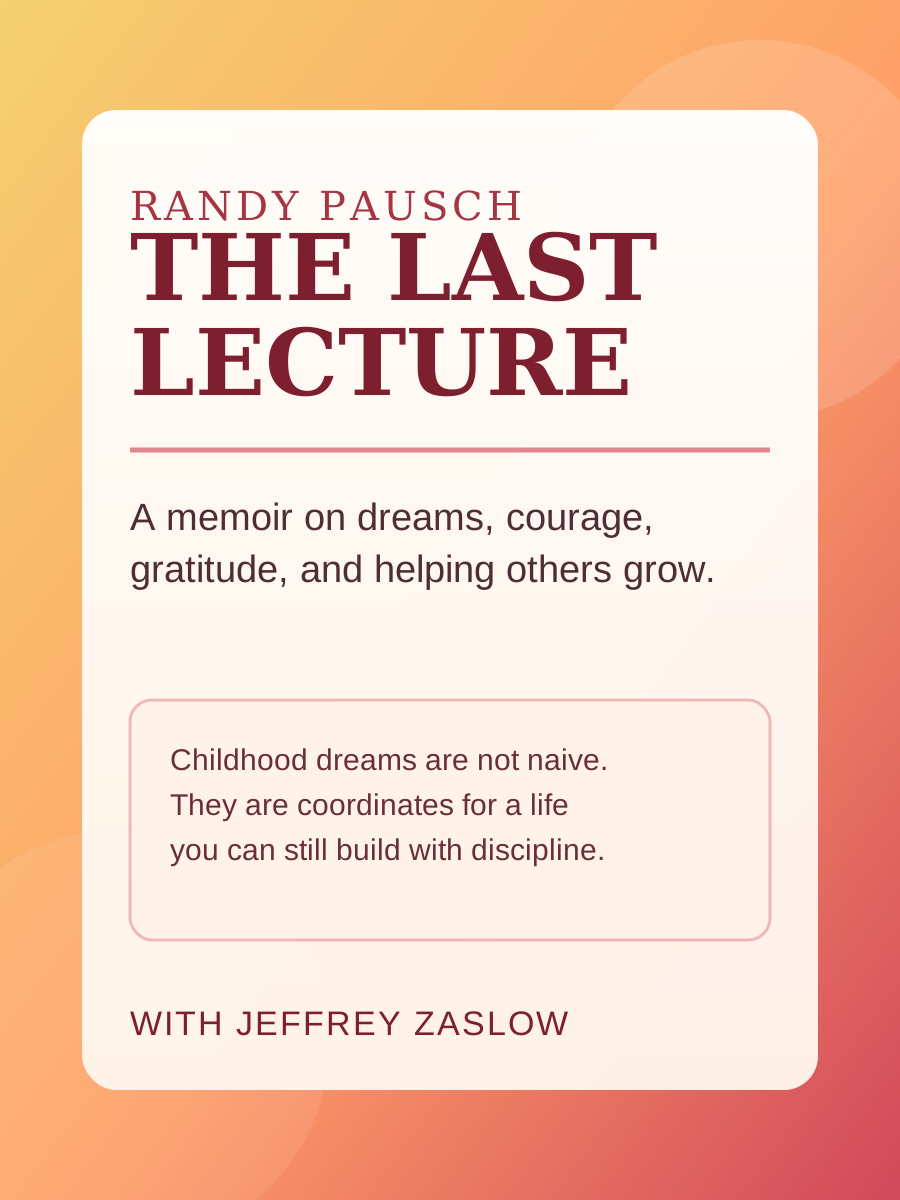
The Last Lecture
Authors: Randy Pausch, Jeffrey Zaslow
Publisher: Hyperion; Эксмо (русское издание)
Length: 2008
Randy Pausch and Jeffrey Zaslow's book about pursuing childhood dreams, living with intention, and helping others reach their own goals.
 Original
Self Development / Public Speaking / Leadership
The Last Lecture is not just a story about a terminal diagnosis. It is a practical model for living: dreams define direction, disciplined effort creates outcomes, and mature leadership means enabling growth in other people.
1. The six-part structure of the book
Part 1
The Last Lecture
Pausch explains why he chose to give a lecture about life and childhood dreams rather than a technical retrospective.
Part 2
Really Achieving Your Childhood Dreams
Stories about goals from childhood and how they shape long-term behavior, resilience, and direction.
Part 3
Adventures and Lessons Learned
Personal cases around painful but useful feedback, including the 'Dutch uncle' pattern of uncomfortable truth.
Part 4
Enabling the Dreams of Others
His teaching model: mentor students, defend potential, and create opportunities for people who are close to giving up.
Part 5
How to Live Your Life
A practical principles set: discipline, truthfulness, gratitude, persistence, and responsibility.
Part 6
Final words
A message to his children: do not live someone else's script, find your own path, and pursue your own dreams.
2. Principles for living your own life
Personal discipline and work ethic
- Dream big.
- Hard work beats showing off.
- Do not complain, work better.
- Treat the disease, not the symptom.
- Focus on actions, not talk.
- If you fail, keep trying.
- Be the first penguin: test new ideas despite risk.
- You can only rely on what you bring with you.
- No work is beneath you.
- Never give up.
Working with people
- Sit down next to people first, then solve the conflict.
- Look for the best in each person.
- Do not over-index on what others think about you.
- Learn to attract attention to what matters.
- Thank-you letters are still powerful.
- Loyalty is a two-way road.
- Practice gratitude.
- Give gifts and create positive memory.
- Bad apologies are worse than no apology.
- Tell the truth.
- Sometimes you only need to ask.
Courage, optimism, and responsibility
- Throw in the white flag when reality is irreversible.
- A deal can reset relationship dynamics.
- Understand the system you are entering.
- Keep a box of crayons: preserve curiosity.
- The '$100,000 salt shaker' story: empathy matters.
- Remember your responsibility to society.
- Choose Tigger or Eeyore: optimism is a decision.
- Build optimism through action, not slogans.
- Letters from people can carry you through hard periods.
- Friday 10 PM rule: excellence has an invisible workload.
3. Signature stories and lessons
The 'Dutch uncle'
Blunt feedback about arrogance changed Pausch's trajectory. Hard truth can be developmental when grounded in care.
Friday, 10 PM
His phrase 'call me Friday at 10 PM' highlighted the hidden operating cost of outstanding results.
The $100,000 salt shaker
A Disney service story showing how a small empathetic action can create a lasting customer memory.
Letters from strangers
After the lecture went viral, messages from people became a meaningful source of strength and purpose.
4. Common anti-patterns
Treating the book as inspiration-only and skipping execution habits.
Reading 'dream big' as an excuse for lack of discipline.
Romanticizing overwork instead of building sustainable pace.
Using 'radical honesty' as a cover for rudeness.
Waiting for ideal timing instead of taking small immediate steps.
5. Practical guidance for engineering leaders
Run quarterly 'dream review' sessions with your team, not only KPI reviews.
Build a feedback culture: tough on problem, respectful to person.
Make gratitude visible in team rituals.
Allow second attempts after mistakes when learning is explicit.
Ask weekly: are we fixing root causes or only symptoms?
Operationalize optimism with concrete short-horizon actions.
The core closing message is leadership-relevant: do not force people into your script; help them become who they genuinely want to become.