
The History of the Future: Oculus, Facebook, and the Revolution That Swept Virtual Reality
Authors: Blake J. Harris
Publisher: Dey Street Books
Length: 2019
The rise of Oculus VR, from a prototype in a trailer to the Facebook acquisition and the consequences for its founder.
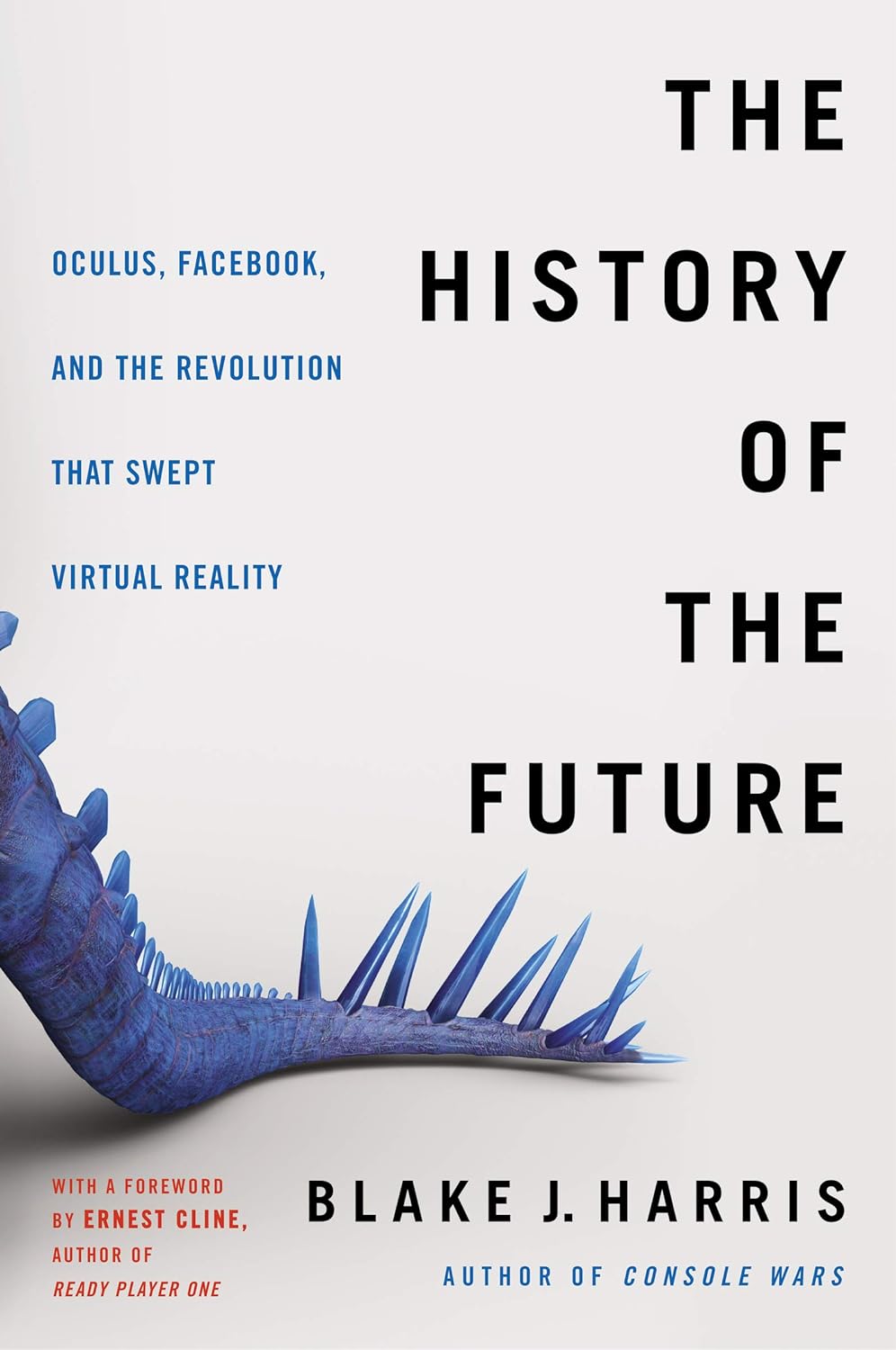 Original
 Translation
Brief
The essential idea
Blake J. Harris recounts how Palmer Luckey's virtual-reality prototype grew from work in a trailer into Oculus. Brendan Iribe supplied company-building leadership, John Carmack's E3 2012 demonstration gave the technology credibility, and the 2012 Kickstarter campaign raised roughly $2.4 million from an enthusiastic community.
Facebook acquired Oculus in 2014 for about $2 billion, changing both the opportunity and the ownership structure. The 2016-2017 product launch, legal conflict, and reputational controversy revealed the cost of moving from founder-led insurgency into a powerful corporation; Luckey ultimately left and later founded Anduril.
For technical leaders, the story is about more than invention. Capital, governance, legal exposure, founder reputation, and post-acquisition integration can determine whether a breakthrough becomes an enduring institution and whether its creator retains meaningful control.
Decision lens
Key takeaways
A compelling prototype needs complementary company-building and operational leadership.
Community funding can validate demand but also creates expectations that survive an acquisition.
A large acquisition changes decision rights, incentives, and the meaning of founder ownership.
Legal and reputational risks can become product and organizational risks at the same speed as technical growth.
Corporate integration must preserve the acquired team's strengths while making governance explicit.
Founders and technical leaders should understand the consequences of capital agreements before scale makes them irreversible.
Workplace experiment
Apply it at work
- 1
Map decision rights before and after any major funding, partnership, or acquisition scenario.
- 2
Document legal, reputational, and community obligations alongside the technical roadmap.
- 3
Identify which cultural and engineering capabilities must remain protected during integration.
- 4
Create a founder and key-person succession plan before personal controversy can become a system risk.
Choose one action, define the observable effect, and keep the first test small enough to reverse.
Evidence
Sources and further reading
Additional sources
Channel, aggregator, and commentary links confirm the work; they are not the primary source.